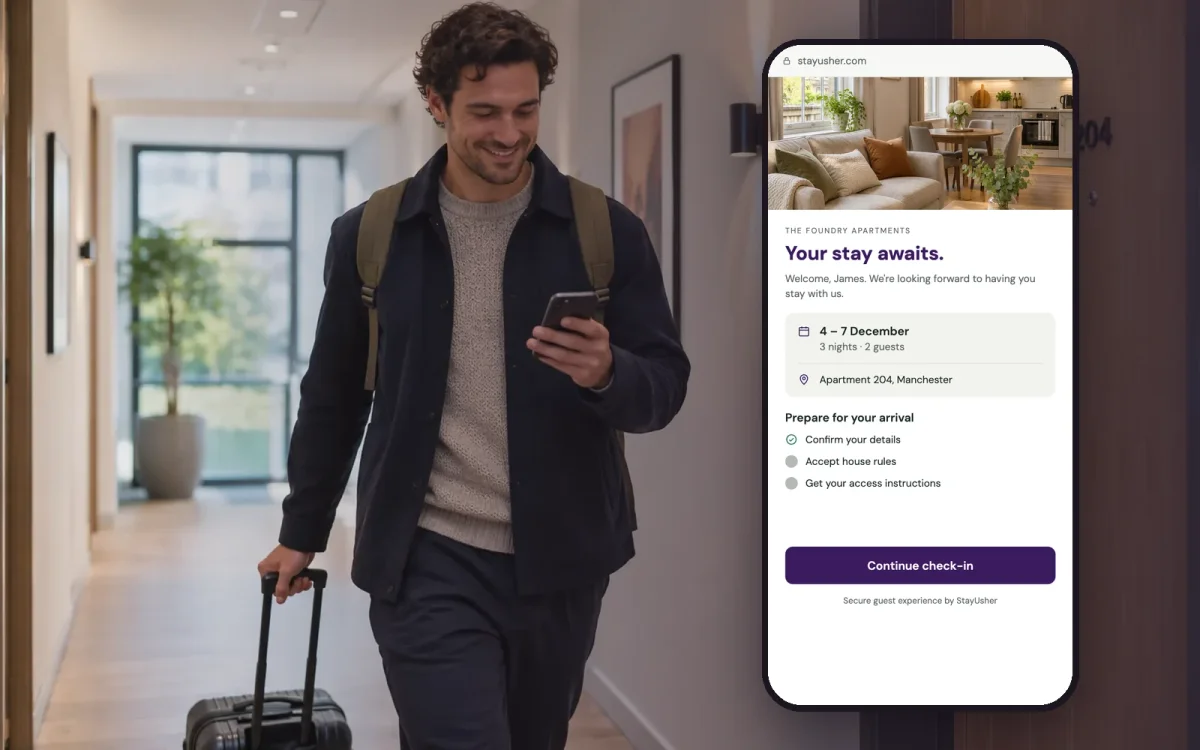
The first few minutes of a stay matter. A guest arriving after a long journey wants to recognise the place, understand what happens next and feel that someone was expecting them. A form on the doorstep can interrupt that welcome before it has properly begun.
Online guest check-in for independent hospitality gives the preparation a better place. Guests complete the routine details before arrival, while the host has time to review what is missing and act on the information that matters.
StayUsher brings that process together for cottages, B&Bs, guest houses, serviced apartments and glamping accommodation. It is designed around the working day of an independent host, with a guest experience that carries the character of the property.
The purpose is a boutique welcome that is easier to prepare consistently. The administration has a clear sequence, leaving your own care and attention available for the visit itself.
What online check-in means for an independent property
Online check-in is the preparation a guest completes ahead of the physical arrival. It collects the details you need, gives house rules a defined place and helps you understand whether the stay is ready for the handover.
It is separate from making the reservation. A booking tells you that someone is coming. Check-in progress tells you whether they have completed the requested preparation.
That distinction is useful in a small operation because the same person often handles several jobs. You may be answering a guest, checking a room and dealing with a delivery in the same hour. Information that is scattered across different messages adds another task to that day.
StayUsher provides a guest arrival view alongside the check-in journey. You can see which stays need attention and deal with them before an unfinished request becomes an arrival-day problem.
A boutique welcome begins with preparation
Independent hospitality has a particular strength: someone knows the property and takes an interest in the guest. That knowledge should survive the administrative process.
A guest house owner may want to plan breakfast around an early departure. A cottage host may need to explain the last turning from the main road. An apartment operator may know that the postcode sends visitors to a commercial entrance instead of the residential door.
Collecting information before arrival creates room for those useful decisions. You can notice the request, prepare the answer and make the guest’s next step clearer.
StayUsher is built around that connection between organisation and care. The aim is a guest who arrives prepared and a host who can focus on the welcome. There is no need to adopt the departmental structure or language of a hotel group to achieve it.
Start from the correct reservation
A reliable check-in begins with the stay it belongs to. Confirm the dates, the property assignment and the guest contact details before sending an invitation.
StayUsher works alongside your booking arrangements. Compatible calendar feeds help bring upcoming reservations into the arrival picture, and direct bookings can be included through your normal booking process.
The calendar connection has a specific role. It helps organise arrivals; your original booking system remains the reference for the full reservation, payment arrangements and channel-management functions you use.
For a same-day change or last-minute booking, review the source reservation directly. Then check that the guest preparation reflects the confirmed arrangement. The ordinary process becomes more dependable when the first step is based on the right stay, rather than a message copied from a similar booking.
Send an invitation with one clear purpose
The guest should immediately understand why you are contacting them and what they need to do. Name the property, identify the stay and explain that the link is for their pre-arrival check-in.
Keep the action visible. A long message containing local recommendations, parking instructions and several requests can make a simple task harder to recognise. The wider information has a home in the guest portal.
You can send the check-in invitation from StayUsher or copy the guest link into the booking conversation you use. Choose the route that makes the request clear and recognisable for that guest.
The wording should sound like your property. A straightforward explanation of what to complete and what happens next is more welcoming than an unexplained form. You are preparing someone for a visit, so the request should feel connected to the place they have chosen.
Let guests complete check-in without another account
StayUsher’s check-in link opens in the browser. Guests do not need to create a StayUsher account or download a separate guest app.
That keeps the task focused on the stay. They open the invitation, complete the requested preparation and return to the information about their visit.
Read the process on a phone when you set it up. Guests may be using a small screen between other tasks, so concise wording and recognisable property details matter. A clear request is easier to complete than one that assumes the guest understands your internal terminology.
Encourage completion before travel. The journey is a poor moment to discover that a required detail is missing, especially if the final approach has weak reception. Getting the ordinary preparation done earlier gives both sides more time to deal with questions.
Collect details that have a practical purpose
StayUsher connects guest details with the reservation, including names and nationality for the guest register and expected arrival information. That is a more useful working record than a booking containing only the lead booker’s name.
An expected arrival time helps you plan the handover and notice a late arrival. It is an estimate about the journey, separate from the time the property is available.
Ask for information because it supports the stay or the records you need to keep. Keep the request proportionate and explain its purpose clearly. A guest should not have to work out why they are being asked an unrelated question.
Registration also has a defined meaning. It collects information and records the guest’s actions in the preparation process. It does not turn agreement acceptance into identity-document verification. Using the information for its actual purpose makes the process clearer for the host as well as the guest.
Put breakfast preferences where they can be acted on
For a B&B or guest house, the first morning can be as important as arrival itself. Knowing when guests would like to eat and what dietary requirements they want to share helps you prepare.
StayUsher’s breakfast preferences give those requests a place before the stay begins. You can plan service, arrange supplies and discuss anything that needs a particular answer.
Imagine two rooms leaving early while another family wants a slower breakfast. The reservation dates do not tell you how to organise that morning. The preferences guests share give you the detail you need.
This is the kind of personal care a boutique product should support. The software does not replace your judgement about what you can offer. It helps the request reach you in time to use that judgement, rather than appearing as a surprise while you are carrying plates.
Give house rules a defined place in the welcome
An independent property often has arrangements guests need to understand. A cottage may share a drive. An apartment may sit in a residential building. A guest house may have specific breakfast or visitor arrangements.
StayUsher includes house rules and rental agreement acceptance in check-in and keeps a timestamped record. Guests can read the information before arriving, and the host can see whether the preparation is complete.
Write the rules around decisions people will actually make. Explain the parking space, shared entrance or quiet period in plain language. Keep the arrangements consistent with what the guest booked.
A question about a rule is easier to resolve before the journey than at the front door. Giving the information a place in check-in helps the host prepare a clear, proportionate request while keeping the personal welcome available for the visit.
Use reminders to handle repetition
Sending the same check-in reminder by hand does not make it more personal. It uses attention that could go towards a useful reply or a better-prepared property.
StayUsher’s automated messages cover routine invitations, reminders and confirmations. They support a consistent sequence around the guest’s preparation.
Use the arrival view to identify the exceptions. Someone may have missed the invitation, be uncertain about a rule or need help with the task. A direct conversation can resolve that particular issue instead of repeating the same request indefinitely.
The distinction matters for a small business. Automation should remove avoidable repetition and leave the host in a better position to answer when a person needs attention. That is how an organised process can feel more thoughtful rather than more distant.
Connect completed check-in with the access handover
Finishing the preparation is one part of being ready to arrive. The property’s configured arrival time is another.
StayUsher releases arrival and access instructions after both conditions are met: check-in is complete, and the arrival time you set has been reached. A guest who completes the form early does not receive the code immediately just because the form is finished.
This creates a sequence you can explain. Complete the preparation before travel; the access details will become available for arrival. The host supplies the instructions for the actual access arrangement.
Keep early-arrival requests connected with a real decision about the property. The software organises the ordinary release, while you confirm exceptions using the circumstances of the stay and the changeover. That keeps the guest’s expectations aligned with the welcome you can provide.
Make the next step recognisable
The guest should not feel that completing check-in has sent them into a different experience from the property they booked.
StayUsher’s branded guest portal uses your photographs, logo and colours. It gives the stay a recognisable home for the preparation, arrival information and useful details during the visit.
Use that continuity well. Keep the property name consistent, choose photographs that identify the place and write the welcome in your own voice. An entrance photograph can do more practical work than a decorative image with no connection to the handover.
The portal also provides somewhere to return. Guests can find information again instead of reconstructing the visit from a string of messages. That helps the host keep routine answers available while remaining free to respond personally when the question is different.
Adapt the preparation to the accommodation
The core check-in process serves several kinds of independent hospitality, but the details around it should reflect the place.
For B&Bs and guest houses, breakfast and expected arrival information can shape the owner’s working day. For holiday cottages, clear directions and an organised remote handover may be the main priorities.
A serviced apartment may need to explain communal and private entrances separately. A glamping site or lodge may need guests to understand parking and the route to their accommodation before they travel.
Use a consistent preparation sequence, then make the surrounding information specific. A boutique welcome does not mean inventing a different administrative process for every booking. It means applying the process with the care and knowledge the property deserves.
Prepare for a last-minute reservation
A booking for tonight compresses the time available for preparation. Treat it as an immediate arrival task rather than assuming the usual lead time exists.
Check the reservation, confirm the contact details and send the invitation through the appropriate route. Make sure the guest understands what needs to be completed before the access handover.
Review the check-in progress and deal directly with a question or missing detail. The goal is to get the ordinary preparation into place quickly without losing the clear sequence.
This is also a useful test of your wording. An invitation that makes sense only when read several days in advance may need adjustment for an imminent visit. Keep the property information accurate and the next action obvious, so the guest can prepare without another round of uncertainty.
Test the process as a guest
Before using the check-in process for a live arrival, run through a test stay. Check the property details, invitation and requested information on a phone.
Read each instruction as someone unfamiliar with the accommodation. Notice words that rely on local knowledge, an unclear description of the entrance or a message that asks for several unrelated actions.
Then review the host’s side. Can you tell whether the preparation is complete? Do you know what needs attention? Are the supplied access details and arrival time correct?
Ask someone else to try the sequence without extra explanation. Their questions are useful because they reveal assumptions you have stopped noticing. A small correction before sending the first invitation can improve the same part of the welcome for every guest who follows.
Choose a product that supports your care
Every StayUsher plan includes the core online check-in journey, guest register, agreement acceptance, breakfast preferences, automatic arrival instructions and the branded guest portal. The pricing page explains how the plans differ in guidebooks, Wallet passes, team access and other features.
Choose around the business you actually run and the welcome you want to prepare. You can keep your existing booking arrangements while giving guest preparation a clearer home.
Our comparison hub explains the broader distinction. StayUsher focuses on the care behind independent hospitality, rather than treating a small property as a miniature hotel group.
Start with your next arrival. Collect what you need in time, make the next step clear and keep your attention for the person coming to stay. That is what online check-in should make easier.
Questions about online guest check-in
Is online check-in useful when I greet guests personally?
Yes. The guest can finish the routine administration beforehand, leaving the greeting for their journey, the property and the visit ahead. The same preparation also helps you organise arrivals you cannot meet.
Does a completed form release the access code immediately?
Access instructions are released after completed check-in and the configured arrival time. Both conditions form part of the ordinary handover.
Do I have to move my bookings into a new reservation system?
StayUsher works alongside your existing booking arrangements. Compatible calendar feeds help organise the arrival picture; your original system retains the wider reservation functions you use.
What happens when a guest needs help?
Use their check-in progress to identify what is unfinished, then contact them through your normal guest communication route. A clear answer to the actual question is more useful than another unexplained reminder.