A factory approach fails independent hospitality when it makes the guest fit the process. The message goes out, the form is completed and the booking moves to the next stage, but nobody notices whether the person arriving actually has what they need.
Independent hospitality earns its character through that attention. The host knows the awkward entrance, the breakfast arrangement that needs planning and the recommendation that will make a short visit more enjoyable. Small details become valuable because someone understands the place and has considered the guest.
At StayUsher, we believe the technology around a stay should support that care. Reliable preparation gives a host more room to notice, decide and respond. A boutique guest experience depends on both.
Here is why a factory approach misses what independent hosts do well, and how to make the little things a dependable part of every welcome.
What a factory approach looks like in hospitality
The factory approach is a way of working in which completing the standard sequence becomes more important than the experience it produces.
A reminder is sent to a guest who has already asked for help. The same directions are copied across properties with different entrances. A specific request receives a generic reply because the process has no obvious place for a human decision.
This can happen in a small business as readily as a larger one. The problem is the assumption that every visit should move through the same steps in exactly the same way.
For an independent host, that assumption throws away useful knowledge. You know what makes your property different and can understand why a particular guest needs a different answer. A process that ignores those advantages makes the business less individual without necessarily making the stay easier.
Guests experience the result, not the completed task
A host may see that the arrival instructions were delivered successfully. The guest may still be standing at the wrong door.
The two facts can exist at the same time. Sending the message completes an administrative task; helping the visitor reach the property is the purpose of that task.
This is a useful distinction when reviewing your guest journey. A completed form, an answered message or a guidebook link tells you something happened. It does not, on its own, tell you that the person understood what to do.
Look at the questions that still arrive afterwards. They reveal where the preparation falls short. The right improvement may be a clearer photograph or a more specific sentence, rather than another reminder that the original information has already been sent.
The first few minutes tell a guest whether they were expected
Consider a couple arriving at a cottage after dark. They have the postcode and a code, but there are two gates and neither is identified in the message.
Now imagine the same arrival with a photograph of the correct entrance, a short explanation of where to park and a description of the key safe. The equipment has not changed. The host has supplied the knowledge that makes it usable.
The difference is small in the preparation and substantial in the experience. Guests can get inside and begin the visit instead of trying to work out what the host meant.
That is what a thoughtful welcome often does. It removes an uncertainty the guest should not have had to solve. The host’s care is visible through the usefulness of the detail, even when nobody is there to greet them.
Small details work because they are relevant
A personal touch does not need to be expensive or decorative. It needs to make sense for the person and the moment.
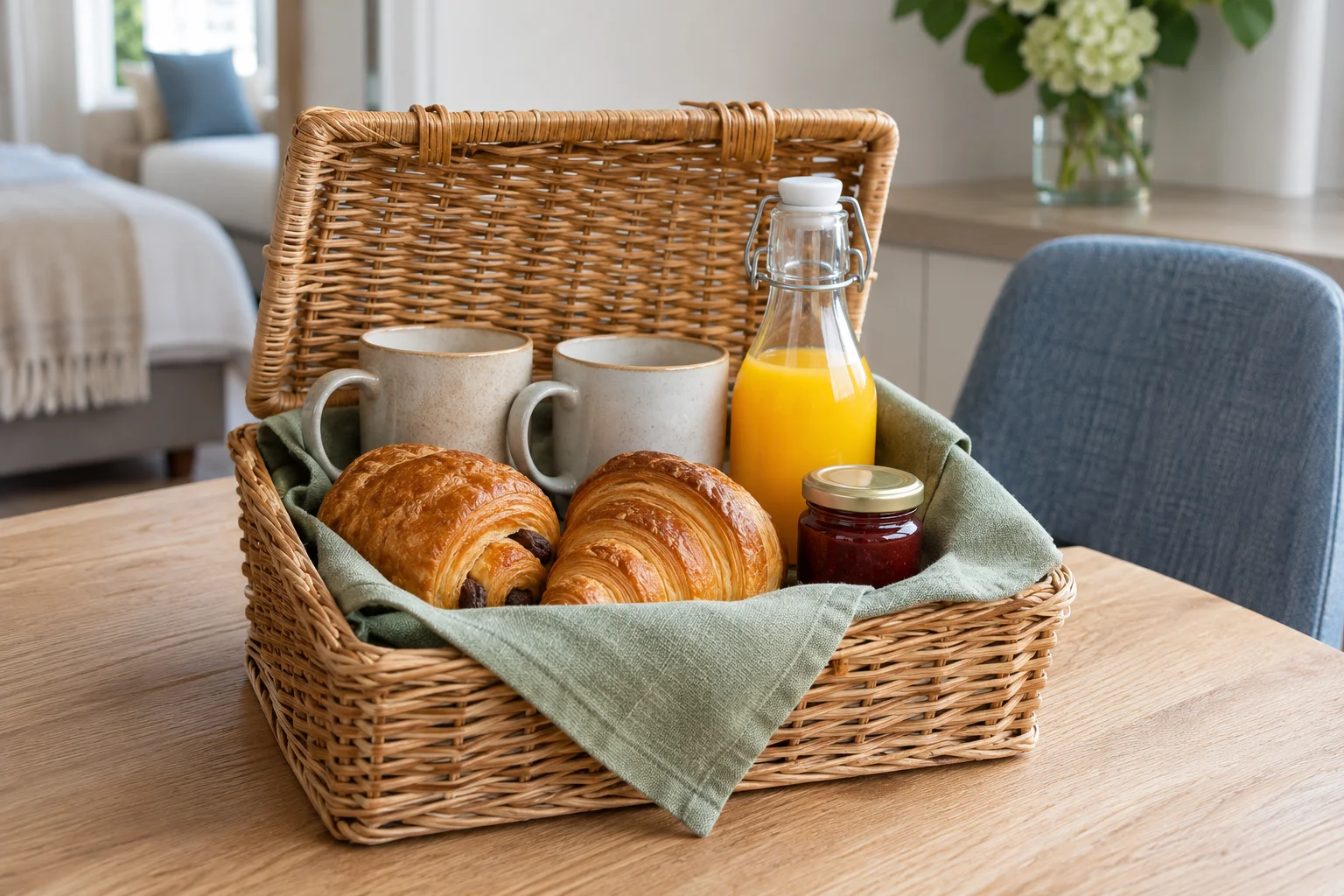
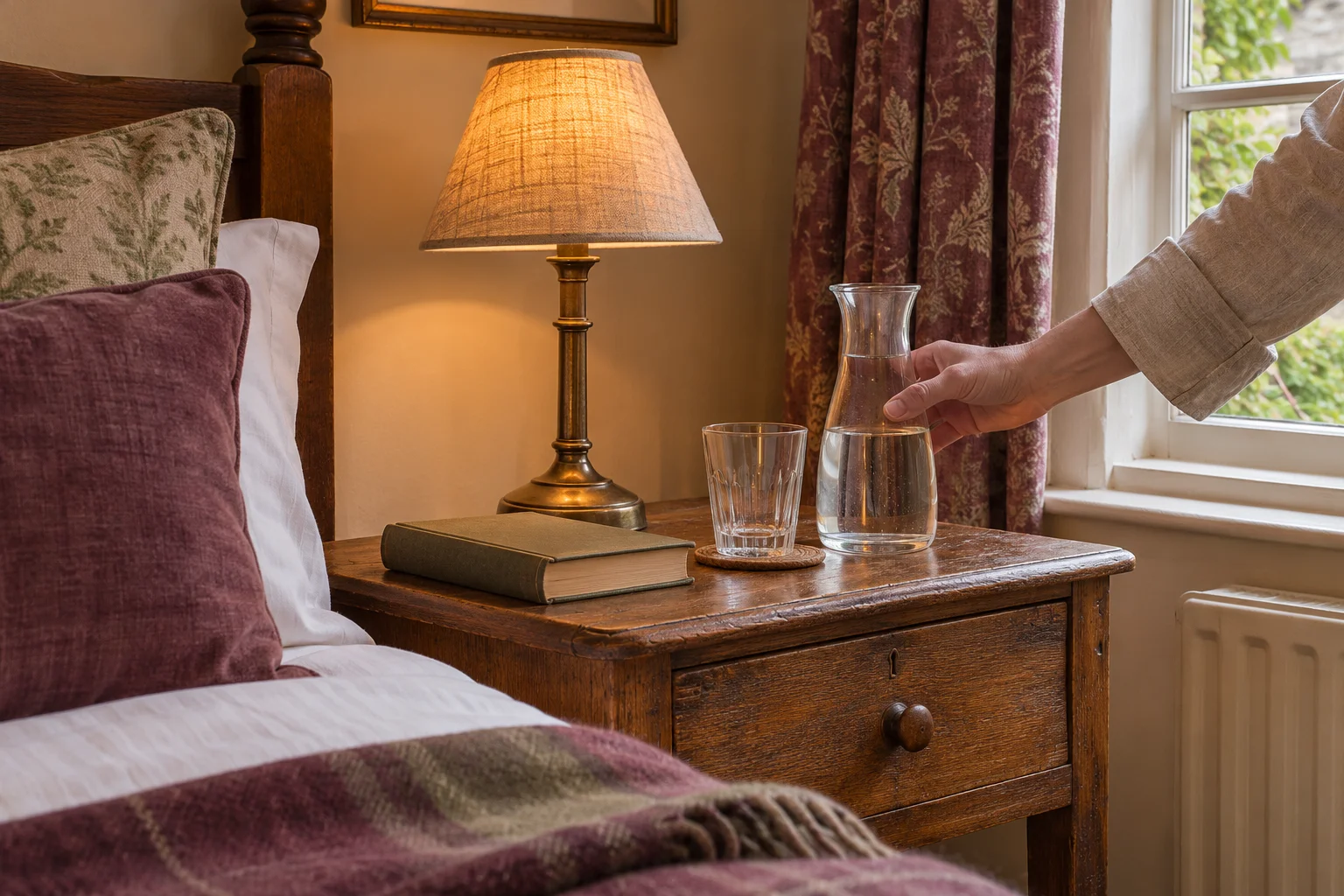
A reading lamp that can be switched on from the bed is useful. A clear explanation of the nearest place to eat after a late arrival is useful. Knowing about an agreed early breakfast before the kitchen becomes busy is useful.
These details do different jobs, but they share a quality: someone has thought about how the guest will experience the stay.
Adding more objects to a welcome basket is not an automatic improvement. If the ordinary arrangements are confusing, a generous gift will not make the entrance easier to find. Begin with the details that help people settle in, then choose the extra touches that belong to your property.
Give the property permission to be itself
An independent cottage, guest house or apartment has its own layout, history and atmosphere. The guest information should help people recognise that character.
Use photographs of the actual place. Describe the entrance, shared areas and facilities in terms that make sense on site. Write the welcome in a voice you would use when speaking to a guest.
A branded guest portal provides somewhere for those choices to come together. The logo and colours help with recognition; the specific, useful content makes the experience feel prepared.
The character should continue through the visit. A guest should encounter the same property in the booking information, the arrival instructions and the local recommendations. That continuity is more convincing than an elaborate brand statement followed by generic answers.
Collect a preference only if it can reach the right person
Asking about a guest’s preferences can be a considerate act. It can also become another administrative exercise if nobody uses the answer.
Think about a B&B guest who requests an early breakfast. The important result is that the request reaches the person who can confirm and prepare the arrangement.
The breakfast preferences collected before arrival give that conversation a place. The host still needs to review what has been requested, clarify anything uncertain and tell the guest what can be provided.
This is where a personal guest experience becomes practical. Information has to connect with action. A form that gathers detail without a clear handover creates the appearance of attention while leaving the actual service unchanged.
Keep consistent standards around the important basics
Personal hospitality benefits from consistency. The property should be ready, the instructions should be accurate and the guest should know how to reach someone when help is needed.
Write down the preparation that makes those basics dependable. Check the physical access arrangement, review the stay details and confirm any specific agreement before arrival.
The value of a routine is that it keeps important work from depending on memory. It gives the host or team a reliable starting point for the visit.
The mistake is using the routine to avoid noticing circumstances. A common checklist can support every arrival while the answer to a guest’s particular question remains individual. Keep the standard of care steady and leave the judgement close to the people providing it.
Automate repetition so attention has somewhere better to go
There is no special warmth in typing the same reminder for the twentieth time. Repeated administration takes attention away from decisions that deserve it.
Online check-in moves routine guest preparation ahead of the physical arrival. Automated messages support invitations, reminders and confirmations. A clear arrival view helps you see what remains unfinished.
Use those tools to create room for a useful response. If a guest has asked about an arrangement, answer the question before sending another generic request.
That is the role we want technology to play in independent hospitality. The ordinary sequence should be organised enough that you can spend less time reconstructing it and more time looking after the visit. The software supports the host’s attention rather than pretending every interaction is identical.
Make room for a decision when the circumstances change
An early-arrival request is a good example of why hospitality needs judgement. The answer can depend on the previous guest’s departure, the changeover and the accommodation being ready.
A useful process makes those facts available to the person deciding. It also helps that person confirm the answer clearly and communicate it to anyone affected.
The guest should not have to infer permission from a completed check-in form or a message that describes the usual arrival time. A specific request needs a specific answer.
Keep the exception connected with the ordinary preparation. Once you have agreed something different, review the information the guest will receive. The experience should reflect the actual arrangement, rather than leaving them to reconcile a personal conversation with a contradictory standard message.
Local knowledge is one of your strongest differences
A guest can find a list of nearby restaurants without your help. Your contribution is knowing which one you would recommend and why.
Explain which place works after a late arrival, where a family can have an easy meal or which route makes a good first walk. The useful part is the context that helps someone choose.
A local guidebook gives that knowledge a home. Keep the selection manageable, link to businesses for changing details and write the advice as though you were speaking to the guest.
The factory approach turns recommendations into interchangeable entries. An independent host can offer a point of view. That makes the advice more relevant to the property, the area and the kind of visit someone has come to enjoy.
A good response matters more than a perfect script
When something goes wrong, guests want to know that someone understands the problem and will take responsibility for the next step.
Start with the actual issue. Acknowledge what the guest has described, explain what you can do and give a realistic expectation for the response.
A prepared reply can help you cover important information, but it should not prevent you from answering the question in front of you. Sending an unrelated paragraph about normal policy can make the guest feel that their message has not been read.
Follow through on the arrangement. The trust comes from the connection between what you say and what happens next. That is a small-business strength when the person responding understands the property and can make a practical decision.
Look for the effort guests should not have to make
One way to improve a stay is to notice where the guest has to compensate for missing preparation.
They search several messages for the code. They try two entrances before finding the right one. They ask for the Wi-Fi information because it is hidden beneath a long welcome note.
Walk through the visit and identify those moments. Improve the explanation, move the information or remove an unnecessary step.
The improvement may be almost invisible when it works. The guest simply finds what they need and gets on with the stay. That is still hospitality. Taking care over the ordinary details can make a stronger impression than adding another message telling people how much you care.
Make personal service sustainable
A boutique approach does not require the owner to be constantly available or to agree to every request.
It requires a clear idea of the service you can provide and a dependable way to deliver it. Explain the arrangements, offer a useful answer and keep the promises you make.
Choose personal touches that fit the property and the time available. If a service requires additional work or supplies, understand the cost before making it a routine part of the stay.
Our article on increasing margins through service explores that discipline. Thoughtful hospitality and a sustainable business support each other when the offer, effort and price are understood. An overloaded host with unclear boundaries will find it harder to maintain the attention that makes the property distinctive.
Let guest questions guide the next improvement
You do not need to redesign the whole experience to move away from a factory approach. Start with a recurring question or a point where the usual response repeatedly falls short.
Review what happened in a recent stay. What did the guest need? What information did they receive? Where did the host have to fill a gap manually?
Make one useful change, then watch the next few visits. A clearer entrance photograph or a better explanation of breakfast arrangements gives you something concrete to assess.
The aim is an improving welcome, rather than an ever-growing set of rules. Keep the changes that help guests and simplify anything that makes the visit harder to understand.
Build the reasons people remember and return
Guests remember a property through the whole visit. The room, the setting, the information and the way someone responded all contribute.
An independent host can make those parts feel connected. A practical arrival, a useful recommendation and an arrangement handled with care tell the same story about the business.
That gives someone a reason to choose the property again when another visit makes sense. Our guest retention guide explains how to connect a good first stay with relevant follow-up and a clear return-booking route.
The relationship starts with the experience itself. A discount sent afterwards cannot substitute for a stay that felt well prepared. Give guests something they want to repeat, then make it easy to stay in touch on their terms.
Why we built StayUsher around the welcome
We felt there was room for a boutique offering that matched the care independent operators give every guest.
StayUsher brings together guest preparation, arrival information and the host’s own property identity. Practical preferences have a place before the visit. The portal makes useful information recognisable. Guidebooks let local knowledge become part of the stay.
The ordinary administration should help those things happen consistently. It should not make the host organise a cottage or guest house as though it were a multinational operation.
That is our point of view. Independent hospitality deserves software that understands it, and a good welcome deserves more attention than a completed task list.
Start with one small detail that makes a real difference
For the next arrival, choose one thing the guest would otherwise have to work out for themselves. Explain the correct entrance, make the departure arrangement easier to find or prepare a recommendation for their first evening.
Connect that detail with the rest of the visit. Check that the information is accurate, that the right person can act on a request and that the guest knows how to reach help.
The factory approach makes the process the centre of the experience. Independent hospitality can keep the person and the place at the centre instead.
That is where the little things make the difference: when they are useful, specific and backed by someone who has taken the trouble to think about the stay.
Questions about personal service in independent hospitality
Does a personal welcome require meeting every guest?
No. Clear preparation, your own wording and a useful response when needed can make a remote arrival feel considered. The guest should understand the handover and know how to reach the person responsible for help.
Should every guest have a different check-in process?
Keep the reliable basics consistent. Adapt the information and the decisions around them to the property and the particular visit.
Which small detail should I improve first?
Start with a recurring source of guest uncertainty. Fixing an unclear instruction or a missing piece of information creates an improvement you can put into practice immediately.