Independent hosts can increase margins through service by offering useful extras, pricing them around the full work involved and removing repeated administration from the stay. The aim is a guest experience people value and a way of delivering it that leaves a worthwhile contribution.
This fits the strengths of independent hospitality. You know the property, understand the local area and can spot the small service that would make a particular visit easier. A well-chosen breakfast hamper or a carefully agreed departure arrangement can be useful precisely because it suits the stay.
The commercial discipline is to connect that value with the cost of providing it. Extra revenue is only part of the picture. Your time, supplies, fees and the effect on the rest of the day also matter.
Here is a practical way to improve hosting margins through better guest service, without turning the welcome into a series of sales pitches.
Separate better revenue from better margin
Selling more services increases revenue. Whether it improves the result depends on what those services cost to provide and what other work they displace.
A hamper that sells well can still earn little if every order requires a separate shopping trip. A late checkout can create a useful contribution on one date and expensive changeover pressure on another.
Tourism NI’s pricing guidance recommends accounting for both direct and indirect costs and including the time spent preparing and delivering an offer. That is a sound starting point for an independent host.
Look at the service as a small operating decision. What is the guest buying, what must happen to deliver it and what will be left after the relevant costs? Answer those questions before deciding whether a higher sales total represents progress.
Start with a service guests already ask for
Repeated requests are useful evidence of demand. Guests may ask about breakfast on the first morning, arriving early, leaving bags or finding a suitable local experience.
List the requests you receive, then identify which ones you can fulfil consistently. A service should solve a recognisable guest need and fit the property.
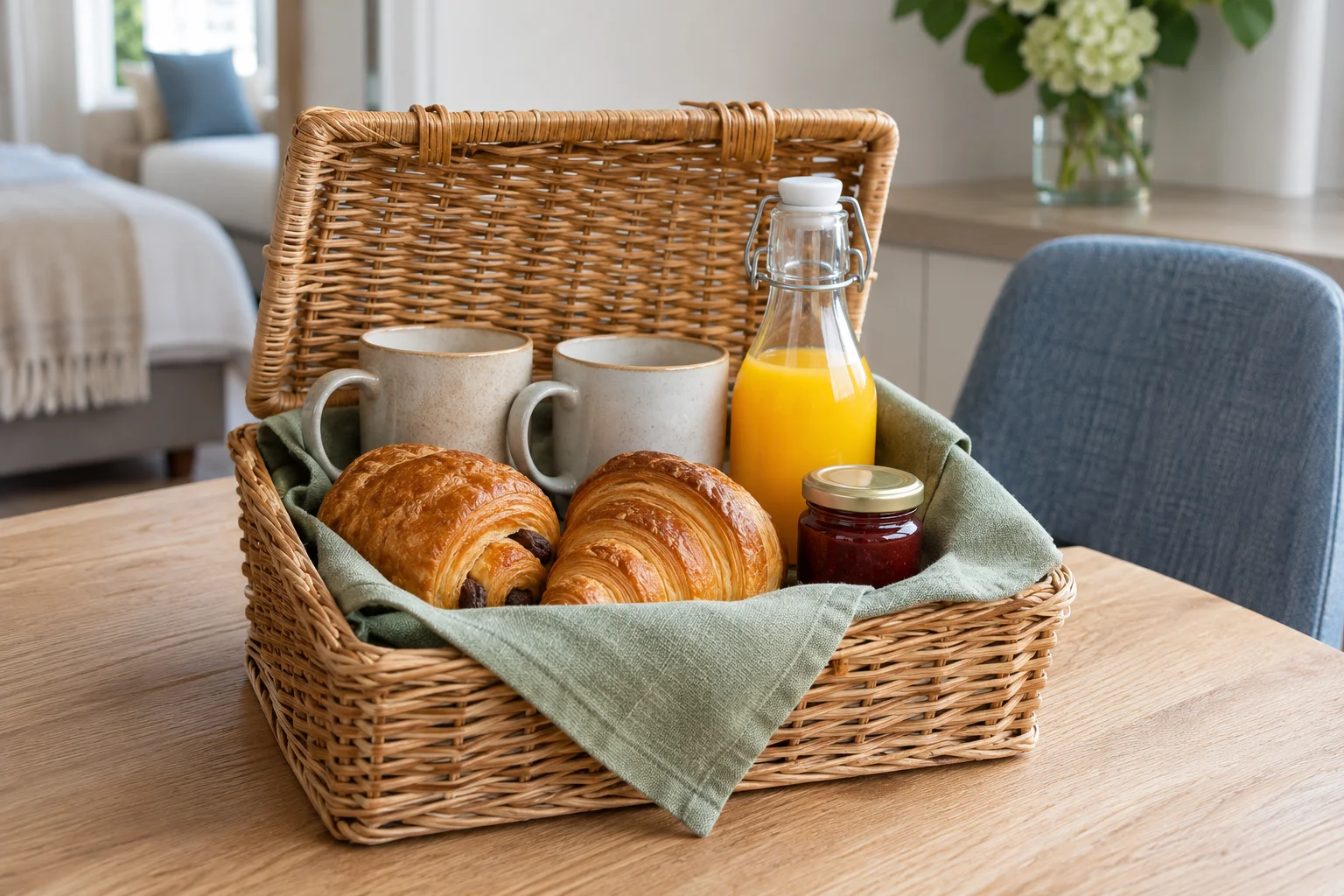
For a remote cottage, a prepared first-morning breakfast hamper may save a shopping trip. For a guest house, an agreed breakfast arrangement can make an early departure easier. For an apartment, a later checkout may be valuable when the day’s schedule allows it.
Do not add an extra simply because another operator sells it. The useful offer is the one your guests understand and your operation can provide well.
Protect the quality included in the stay
Guests should not feel that basic hospitality has been removed from the accommodation price and sold back to them.
Keep the essential welcome clear. Accurate arrival instructions, clean accommodation, working equipment and a route to help belong to the stay you have promised.
Paid extras should add something identifiable. Explain what is included, the price, the deadline for requesting it and any relevant availability conditions.
This distinction helps the service feel considerate. The guest can decide whether an additional convenience matters to their visit, while the ordinary welcome remains complete.
For a boutique accommodation business, the trust behind that decision is valuable. A useful optional offer can support the experience; a succession of unexpected charges can undermine the care you are trying to communicate.
Cost the service before choosing the price
Write down every action required to fulfil one order. Include sourcing, preparation, delivery, communication and any extra cleaning or replacement work.
Price your own time as well as paid staff time. If the owner performs the work, it still uses capacity that could go towards another task or a needed break.
Include the supplies, packaging, transaction costs and a realistic allowance for waste where relevant. Then consider the fixed costs the contribution needs to help cover.
The following example uses invented planning figures for a breakfast hamper for two. Amounts are shown before VAT. It illustrates contribution per order, before fixed overheads and tax.
| Breakfast hamper example | Per order |
|---|---|
| Selling price | £28.00 |
| Food and drink | £9.00 |
| Packaging | £1.50 |
| Preparation and delivery: 15 minutes at £20 an hour | £5.00 |
| Transaction and order-handling costs | £1.50 |
| Allowance for waste | £1.00 |
| Total costs assigned to the order | £18.00 |
| Contribution before fixed overheads and tax | £10.00 |
The contribution margin is £10 divided by £28, or approximately 35.7%. It is not the business’s net profit margin.
Now add an unplanned extra fifteen minutes of work at the same hourly rate. The cost rises by £5, leaving £5 contribution, or approximately 17.9% of the selling price. The guest pays the same amount, but the way the service is delivered changes its value to the business.
Make delivery easier without making the service generic
Once you understand the work, look for a more efficient way to organise it.
A fixed order deadline can let you buy supplies together. A clear description can reduce repeated questions. A defined portion size and preparation routine can make the result more consistent.
Keep the guest benefit visible. Standardising the parts behind the scenes should help you deliver the promised service reliably, while the property still has its own character.
For example, a small selection of well-prepared hampers may work better than an open-ended list of individually sourced requests. Explain the choice, collect the relevant information and confirm what you can provide.
The purpose is to improve the relationship between value and effort. You can be thoughtful about the guest without creating a different, uncosted production process for every order.
Price late checkout around the next arrival
Late checkout can look inexpensive because there may be no obvious supply cost. The real question is what it does to the property schedule.
Check the next reservation, the cleaner’s availability and the time needed to prepare the accommodation properly. A later departure could require extra labour, disrupt another property or reduce the buffer you rely on for problems.
Set a clear approval process. Explain that a request depends on the date and the actual availability, then confirm the arrangement you have agreed.
Do not sell the same time twice. Protecting the next guest’s arrival is part of the cost decision. A paid extension is worthwhile only when it can be delivered without undermining the stay that follows.
The host’s judgement matters here. A fixed offer can explain the service, while the decision about a specific booking remains connected with the real changeover.
Offer extras when they help the guest plan
A useful service needs to be introduced at a useful moment.
A breakfast hamper belongs before the guest buys supplies. An optional departure arrangement needs time for you to review the schedule. A local activity may require advance booking.
Keep the offer brief and relevant. Explain the benefit, what is included and the next step. Avoid putting an optional purchase between the guest and essential access information.
Your guest portal and the communication around the stay should remain easy to navigate. The guest should be able to complete check-in, find the ordinary details and consider an extra without feeling that every part of the welcome is a sales funnel.
Relevance is a better starting point than sending the same menu of offers at every opportunity.
Improve margin by removing repeated work
Service-led margin improvement also comes from how you deliver the ordinary stay.
If several guests ask the same entrance question, improve the instructions. If breakfast requests arrive too late, collect them earlier. If you repeatedly search for unfinished check-in details, give that follow-up a clear working view.
Online check-in, breakfast preferences and timed access instructions can help organise those tasks in StayUsher.
Distinguish released time from a cash saving. Removing ten minutes of administration does not automatically reduce a wage bill. It becomes valuable when you use the time to improve service, handle more work without extra hours or reduce paid cover.
Record what actually changes. That gives you a more useful picture than assigning a financial benefit to every automated message without checking the effect on the day.
Let local knowledge add value to the stay
Some of your strongest service comes from knowing the place.
A considered local guidebook can help guests choose a restaurant, plan an outing or find an option when the weather changes. That information contributes to the value of the accommodation even when it is not a separately priced extra.
If you arrange a paid service with a local provider, agree who fulfils it, how the booking is confirmed and how any payment or commission works. Present the offer clearly so the guest understands what they are purchasing.
Choose partners whose service you can explain with confidence. A recommendation carries your reputation whether you earn anything from it or not.
The goal is a stronger visit with a commercial arrangement you understand, rather than adding unrelated offers simply to create another revenue line.
Test one service before expanding the range
Start with a small, defined offer and a period long enough to see how it works in practice.
Record the number of eligible stays, how many guests ordered, the revenue, the fulfilment cost and the time used. Note cancellations, waste and any effect on the core guest experience.
For example, if twelve of forty eligible stays order a hamper, the take-up rate is 30%. That number alone does not tell you whether the service is worthwhile. Compare it with contribution per order and the effort required at the busiest times.
Change one important element at a time where practical: the description, the timing, the contents or the delivery process. Otherwise, it becomes difficult to understand why the result changed.
A small test gives you evidence to decide whether to keep, improve or stop the offer.
Measure services separately
Additional sales can disappear inside the total accommodation revenue, making it difficult to see which services contribute and which consume time.
Visit Lincolnshire’s profitability guidance recommends separating different products and services when reviewing income and the associated costs. That helps reveal an offer that earns little even when the business as a whole is busy.
Track a few practical measures: contribution per order, contribution per eligible stay, fulfilment minutes and guest feedback. Keep the distinction between revenue, contribution and net profit visible.
Look for side effects too. A popular extra may be difficult to deliver on a changeover day. Another service may sell less often but fit the operation particularly well.
The right decision is the one that improves the whole business, including the quality of the visit and the capacity of the people providing it.
Connect better service with repeat business
The strongest service offers can also give guests another reason to choose your property.
A breakfast arrangement that makes the first morning easier or a useful local recommendation can become part of what they remember. That supports the same goal as the rest of the welcome: a stay worth repeating.
Do not count a future return booking as profit from today’s extra until it happens. Treat repeat business as a separate result to measure.
Our guest retention guide explains how to build a return-stay routine and compare booking groups fairly. Service and retention can support each other, but keeping the measures separate makes it easier to see what is working.
For an independent host, that is a healthier commercial approach than trying to maximise the number of charges attached to one visit.
Put the service into your working routine
Before making an offer part of the normal welcome, decide who does each piece of work.
Someone needs to review the request, confirm availability, prepare what has been agreed and ensure the guest receives it. The price and payment arrangements should be clear through the booking process you use.
Every StayUsher plan includes guest extras and requests, such as late checkout and breakfast hampers. The pricing page sets out the plan details. The host still needs a fulfilment process that connects the offer with the actual property and team.
Keep the description and the delivery aligned. A modest service that arrives exactly as promised is easier to build a business around than a generous-sounding offer that repeatedly needs an explanation or apology.
Build healthier margins around a better stay
Choose a service that answers a real guest need. Cost the work properly, present the offer at the right moment and review what is left after delivery.
Then apply the same discipline to the ordinary welcome. Prepare information once, collect useful preferences early and remove repeated tasks that consume the attention you want to give guests.
The boutique approach is commercially practical because it connects care with a clear way of working. Guests receive something relevant, and the host understands the effort required to provide it.
Start with one offer or one recurring source of wasted work. Measure the result, improve the process and expand only when the service earns its place in the visit.
Questions about increasing margins through service
Which guest extras are most profitable?
The answer depends on demand, price and the full cost of delivery at your property. Start with a service guests request, then measure its contribution and the time it uses before expanding it.
Is a late checkout almost pure profit?
Only when the wider schedule supports it. Include extra cleaning costs, staff time and any effect on the next arrival when deciding whether to offer it on a particular date.
Should I charge separately for every personal touch?
Keep the core welcome complete. Paid extras should add a clear optional benefit; ordinary guest care and the service promised with the accommodation remain part of the stay.