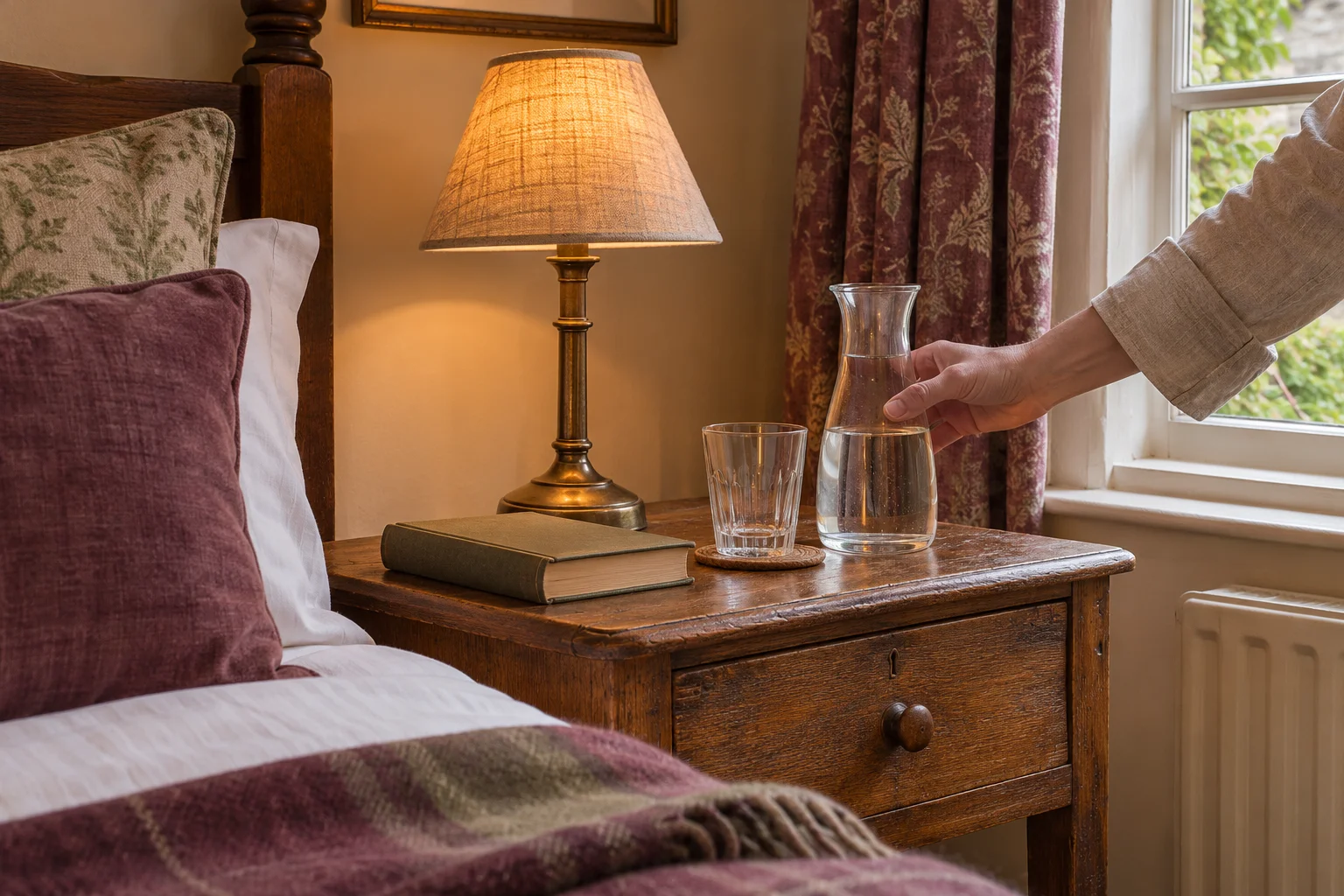
A personal welcome does not depend entirely on being at the door. Guests can feel expected through the information they receive, the way the property is prepared and the response they get when something needs attention.
For an independent host, that matters because meeting every arrival is not always practical. Guests travel at different times, properties may be some distance apart and the owner still has other responsibilities.
The aim is to make self check-in feel like a considered part of the stay. Prepare the ordinary handover properly, carry your property’s character through the guest information and leave a clear route to a person.
Here is how to welcome holiday let guests when you cannot be there, with practical examples for cottages, apartments and guest houses.
Explain the arrival before the journey begins
Guests should know what kind of handover to expect. Tell them whether they will meet someone, use a key safe or follow another prepared access arrangement.
Make the next step clear in the check-in invitation. Explain what they need to complete and when the relevant arrival information will become available.
Keep the wording simple enough to understand on a phone. A guest should not need to read a long welcome letter to discover the task you are asking them to do.
That early explanation gives self check-in a deliberate shape. The guest can plan around it rather than arriving uncertain about whether someone is waiting or whether an important message has gone missing.
Separate useful advance information from the access handover
Some information helps guests before they leave home. They may need to know where to buy supplies, whether they can park beside the property or how to approach the final part of the route.
Access details have a different role and timing. In StayUsher, they are released after check-in is complete and the arrival time you configured has been reached.
Explain that sequence rather than making the guest infer it from what appears in a message. Completing the preparation early does not mean they have been granted early access.
The distinction lets you help people plan while keeping the handover connected to the stay. Guests understand what they can review now and what they should expect next.
Write the route as a first-time visitor
Start where the guest will stop, not where you usually enter the property. The postcode may lead to the opposite side of a building, and the entrance you consider obvious may be hidden from the road.
Walk the route and identify each choice. Which gate should they use? Where does parking end? Is there a communal door before they reach the accommodation?
Describe the stages in order. Use consistent names for doors and spaces so the guest does not confuse a building entrance with a private flat.
Ask someone unfamiliar with the property to follow the instructions without extra hints. The moment you want to explain something aloud is a useful sign that the written handover needs another detail or a clearer photograph.
Photograph the details that help someone arrive
The most useful arrival image may be an ordinary doorway. Its job is to confirm that the guest is in the correct place.
Choose photographs that support decisions: the entrance from the street, the relevant parking area or the location of the key safe. Keep the surrounding instructions specific about what the image shows.
Review the route in the light guests are likely to encounter. A daytime garden photograph may not help someone arriving after dark. Make sure the written explanation remains usable in those conditions.
The interior photographs still matter because they connect the information with the place the guest booked. Use them alongside practical identification, so the welcome is both recognisable and useful.
Test the physical handover
Open the key safe, try the key and compare the code with the information you intend to provide. Check each stage a guest needs to pass through.
If there is a shared entrance, confirm its instructions separately from the private accommodation. If parking requires another access method, make that part of the sequence clear.
StayUsher’s automated access delivery handles the release of the information you supply. You continue to manage the physical equipment and its credentials.
The software and the property need to agree. Accurate delivery of an outdated code still leaves a guest outside. Testing the handover is one of the simplest ways to make remote arrival feel prepared rather than improvised.
Prepare the first ten minutes inside
Imagine the guest opening the door. They want to put down their bags, find the ordinary essentials and understand whether there is anything they need to do immediately.
Make the information they are likely to need first easy to identify. Wi-Fi details, relevant property guidance and a clear contact route should not be buried beneath local recommendations.
Prepare the physical welcome around the same priorities. Check the things you have promised and arrange the space so a visitor can settle in without unnecessary searching.
You do not need an elaborate display. The effect comes from consistency: the place looks like the booking, the ordinary details work and the information helps the guest use the accommodation confidently.
Use your own voice in the welcome
A personal message is most useful when it says something specific about the arrival. It should sound as though it comes from the person looking after the property.
For example:
Welcome to the cottage. You will find the Wi-Fi details in your guest portal and tea in the cupboard above the kettle. The walk into the village starts at the lane opposite the gate. Message me on this number if you need help getting settled. Alex.
Use only details that are true for the actual stay. A promise that the heating is on or a hamper is waiting should reflect something someone has checked.
Keep the message short enough to read at the door. It can point towards the fuller information without trying to reproduce the entire guide.
Give the stay one recognisable home
The guest should know where to return for an ordinary answer. Scattered messages can make a simple question feel like a search task.
A branded guest portal brings check-in and stay information together with your photos, logo and colours. It gives the visit continuity from the preparation through to departure.
Use the property name consistently and check that the information is attached to the correct stay. This is particularly useful where several apartments share an address or a site contains similar-looking units.
The portal helps you prepare information once and keep it accessible. That leaves your personal communication available for the questions and arrangements that need a specific answer.
Recommend a plan for the first evening
Guests arriving in an unfamiliar place may not want a long list of possibilities. They may want to know where to get dinner, where to buy a few supplies or whether there is a pleasant short walk nearby.
Use your local guidebook to offer a considered starting point. Explain why you recommend a place and what the guest needs to arrange before going.
A useful suggestion might be the restaurant within walking distance after a long drive or the shop that is convenient on the approach. Link to the business for current hours and reservations.
The advice should carry your knowledge of the area. A short selection with practical context can feel more personal than a large directory that leaves the guest to do all the choosing.
Make the welcome relevant to the visit
A family, a couple on a walking break and a business traveller may need different details even when they stay in the same property.
Use what they have told you to prepare something relevant. A practical explanation about luggage and the parking route may help a family. Someone leaving early may need clear breakfast or departure arrangements.
Keep the common information consistent, then use your own communication for what differs. There is no need to invent an entirely new process for every booking.
This is the boutique approach to self check-in. Organisation handles the repeated tasks, while the host’s attention makes the visit feel understood. The guest sees the usefulness of the preparation even when they do not see the work behind it.
Check that guests have settled in
A short, well-timed message after arrival can give guests an easy opportunity to raise a problem. Ask whether they found what they needed rather than demanding a detailed account of the stay.
Keep the contact proportionate. One useful check can be welcoming; repeated messages can interrupt the visit.
If someone reports a problem, acknowledge the specific issue and explain the next action. Give a realistic response time and follow through on what you agree.
The purpose is to improve the current stay. A working contact route and a reliable response can be more valuable than a long welcome note when the guest actually needs help.
Make help easy to reach when you are unavailable
If another person covers arrivals, agree the responsibility clearly. They need the relevant information and a practical understanding of the property’s access arrangement.
Tell guests which route to use for an arrival problem. A vague assurance that someone is always available is less useful than a clear contact and an agreed plan.
Keep the handover current if you have made a particular arrangement with the guest. The person covering should not have to reconstruct it from several messages while someone waits outside.
Remote hosting still needs human responsibility. Software can deliver routine information, but the guest should know how to reach someone when the situation requires a decision or practical assistance.
Prepare for the guest whose phone is not available
A guest may lose battery, have poor reception or struggle to retrieve information during the journey. Think through a workable backup for your location.
Encourage them to review essential directions while connected, and explain when the access information will become available. For a remote approach, make the last part of the route clear before they leave a reliable connection.
Wallet passes on the relevant StayUsher plans provide another way to carry selected details, but they still rely on the guest having a usable device and the correct information saved.
The useful preparation is specific to your property. Decide how someone can contact the appropriate person or obtain the essential handover information if the ordinary route is unavailable.
End the stay with a clear departure
Checkout should be as understandable as check-in. Make the departure time and key-return arrangement easy to find before the final morning.
Keep the request focused on the essential actions. Identify the relevant box or location rather than assuming the guest remembers every detail from arrival.
A brief goodbye can leave room for useful feedback. If something remains unresolved, deal with that before moving into a request for a review or a return offer.
The guest retention article explains how a good first stay can lead into relevant follow-up and another booking. That begins with delivering the visit you promised, including the final handover.
Improve the welcome from the questions guests ask
After a few stays, review where you still need to intervene. Repeated questions often point towards information that is missing, hard to find or written from the host’s point of view.
Choose one cause to fix. Replace an unclear entrance photograph, shorten a confusing instruction or move the Wi-Fi details to a more obvious place.
Then watch whether the same question returns. The goal is to make the guest journey easier, not simply to add more content.
Thoughtful self check-in improves through these small corrections. The process becomes more reliable while the property retains its own voice and character.
Let preparation carry your hospitality
StayUsher helps independent hosts organise check-in, practical preferences, access instructions and guest information. The plans page explains the features available for different property and team requirements.
The personal part comes from the decisions you make: the entrance you explain properly, the recommendation you choose and the response you give when someone needs help.
Start with the next arrival you cannot meet. Walk the route, test the handover and read the guest information on a phone. Make one useful improvement before sending it.
A guest can feel looked after without meeting you at the door. The welcome has to be clear, accurate and recognisably prepared by someone who cares about the stay.
Questions about welcoming guests remotely
Can self check-in still feel personal?
Yes. Your wording, property preparation and local advice can make the welcome individual. Clear information and a useful response when needed matter more than the length of the welcome message.
What is the most important arrival photograph?
Choose the image that helps a new visitor identify the correct entrance or access stage. Attractive interior photography is useful, but it does a different job from showing someone where to go.
Should I message guests throughout the stay?
Keep contact useful and proportionate. Make it easy to ask for help, check that they have settled in and respond to the actual request rather than filling the visit with routine messages.